WANLIN-303
Standalone photoelectric smoke alarm family
Review standalone, 433 MHz, LoRa or 4G candidates only after the exact hardware and radio version is identified.
Export product-family resource
Plan procurement with Standalone Fire Detection Guide for Hospitality: review model paths, specification inputs, evidence checks and questions to resolve...
Direct answer
An export standalone smoke alarm detects smoke and provides a local audible warning without requiring a conventional fire alarm control panel. For hospitality, buyers should first define the protected space, required local alarm behaviour, reporting method, power arrangement and destination-market evidence.
This page is written for hotel, guest-room and hospitality procurement teams. It is a product-family selection resource, not a claim that every variant has the same approval, radio module or market access.
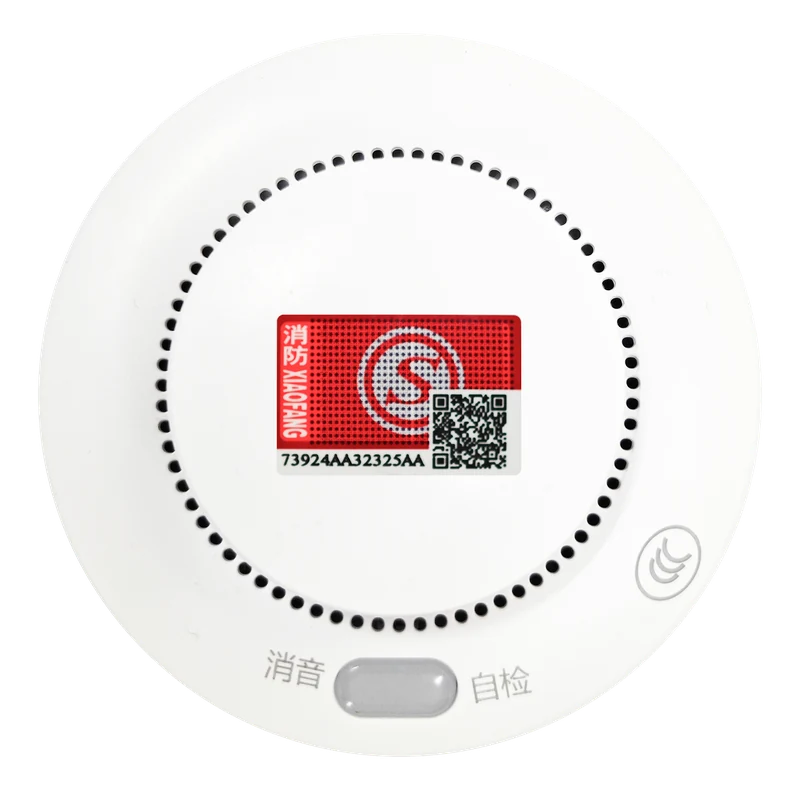
Model reference image
The image identifies a WANLIN-307 family reference. Radio, power, label and evidence scope can differ by controlled configuration; confirm the SKU/BOM before using any formal product or compliance statement.
Open the WANLIN-307 product passport · Review the public evidence center
Verified manual data
Evidence scope: WANLIN-307 user manual, Ver 1.0. Documented manual configuration only; radio, platform, power and market variants require separate SKU/BOM confirmation.
| Detection principle | Infrared photoelectric smoke sensing with MCU processing |
|---|---|
| Rated working voltage | DC 3 V |
| Battery capacity | 2400 mAh |
| Standby current | ≤ 6 μA |
| Alarm current | ≤ 100 mA |
| Sound pressure | > 80 dB(A) at 3 m directly in front |
| Operating temperature | −10 °C to +50 °C |
| Relative humidity | ≤ 95% RH at 40 °C ± 2 °C |
| Alarm output | Audible and visual alarm |
| Low-voltage indication | Below 2.7 V; indicator and one chirp about every 40 s |
| Normal indicator | Indicator illuminates about every 40 s |
| Approximate weight | 140 g including battery |
| Manual-listed execution standard | GB 20517-2006 |
| Installation reference | GB 50116-2013; final layout must follow project design requirements |
Important: “GB 20517-2006” is presented here as the execution standard stated by this manual. This wording is not a third-party certificate claim and does not establish destination-market acceptance. The manual also advises against use where relative humidity exceeds 95%, air speed exceeds 5 m/s, or heavy dust, water mist, steam, oil mist or corrosive gas is present.
Site-specific planning lens
Existing site context: Wanlin Fire presents Fire Alarm and Evacuation Systems for Hotels with clear selection criteria, technical support, system compatibility details and global project supply options. Use that context to define the application; it does not replace model-specific technical or compliance review.
433 MHz, LoRa, 4G and NB-IoT describe different communication paths; they are not interchangeable labels and may change the hardware, infrastructure and regulatory review.
For this site's hospitality focus, the planning lens is “Fire Alarm and Evacuation Systems for Hotels.” Start with the decision that changes the architecture most: local alarm only, or local alarm plus remote event reporting.
Project buyers should separate mandatory requirements from preferences so unsupported options can be identified before samples or labels are prepared.
If the exact configuration is absent from the available evidence, mark the claim pending review instead of extending a result from another variant.
Last reviewed: 2026-11-02 · Reviewed by Wanlin Fire Equipment for product-family and evidence-boundary consistency.
WANLIN-303
Review standalone, 433 MHz, LoRa or 4G candidates only after the exact hardware and radio version is identified.
WANLIN-307
Candidate configurations may include standalone, 433 MHz, LoRa, 4G or NB-IoT; availability and evidence must be confirmed per SKU/BOM.
WANLIN-309
Use when the project requires a local alarm plus a defined reporting path; verify gateway, network and destination-market requirements.
WANLIN-370
A smoke/heat/carbon-monoxide combination concept is not interchangeable with a smoke-only alarm; confirm the required sensing functions first.
Before purchase: request a model-specific evidence pack and have the destination-market requirements reviewed by a qualified local party.
Answers for buyers
Provide the destination country, building type, quantity, required sensing functions, power preference, local-only or remote reporting need, radio or network constraints, packaging needs and target schedule.
A certificate states a defined certification scope, while a test report records tests on identified samples or configurations. Neither should be extended to an unlisted model or variant.
Include the destination market, application, quantity, sensing function, radio or network path, power preference, packaging language, branding scope and required evidence.
Compare gateway dependence, local coverage, carrier availability, operating cost, commissioning, outage behaviour, event latency and the evidence required for the chosen radio hardware.
The importer or another qualified party familiar with the destination requirements should confirm acceptance against current documents before an order is represented as market ready.
Send the destination country, application, quantity, reporting method, preferred power arrangement and required delivery schedule to wanlinfirecontrol@163.com. Recommendations and formal claims remain subject to exact-model evidence review.
Browse product information · Read technical FAQs · Contact Wanlin Fire